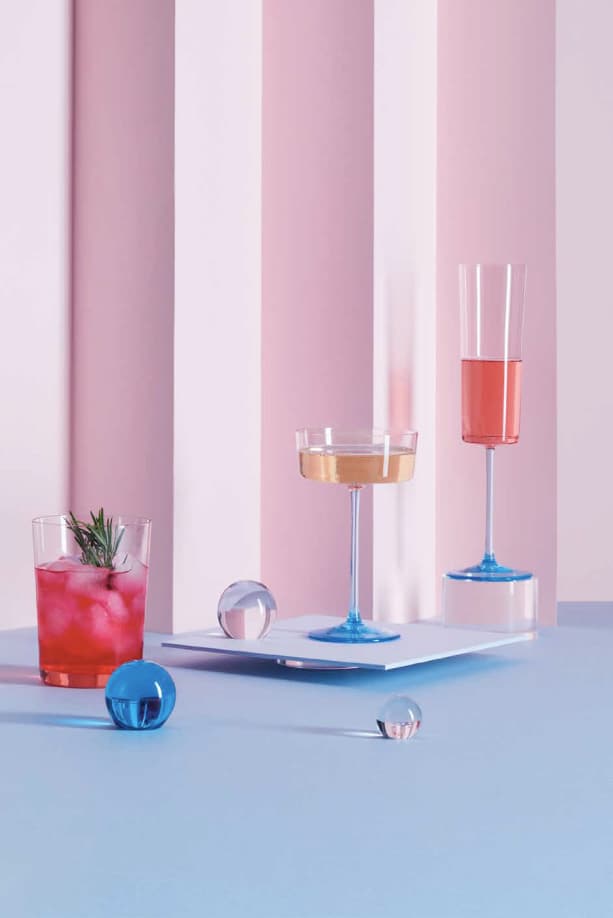
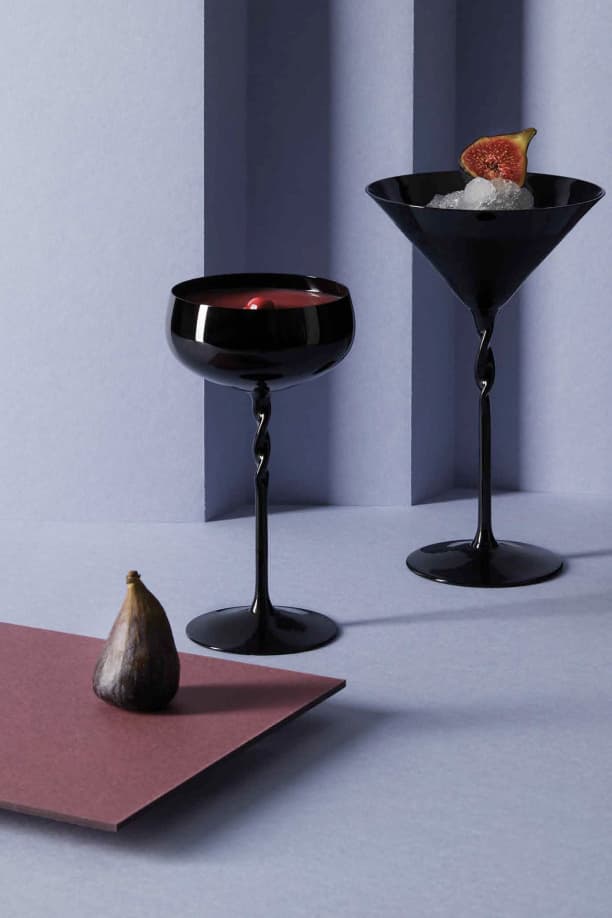
Glassworks were always established in mountainous regions because they used wood as fuel. Existing historical sites show that once wood supplies were exhausted, the glassworks usually moved on, leaving behind settlements where the glassmakers gradually became farmers or local producers of raw materials for glassmaking. This is likely also the case with the glassworks in Harrachov. The truth is that the founding of the glassworks in Harrachov is closely linked to the fate of three older glassworks located within the former Jilemnice estate: the glassworks in Rokytnice nad Jizerou, Rokytná, and Ryžoviště.
1632
The arrival of the Harrach noble family in the Krkonoše Mountains proved to be a decisive moment in the history of the Nový Svět glassworks. First, in 1632, the Harrachs acquired the Branná estate and half of the town of Jilemnice. Then, in 1701, Count Ferdinand Bonaventura purchased the remainder of the Jilemnice estate along with the other half of the town of Jilemnice. After relocating the Harrachov glassworks to Nový Svět, the wealthy Harrach noble family had wood imported even from distant regions so that the glassworks would never have to move again.
Thanks in particular to the skills of the first director, Elias Müller, a glassworks flourished on the Harrach family estate, making Czech glass famous throughout the world. In its early days, production at the Harrachov glassworks was influenced primarily by the late Baroque and Rococo styles. Local master glassmakers were able to produce glass in various colors, such as blue, yellow, red, green, black, and purple, and they also produced opal glass. The glassworks’ fame was further enhanced by the fact that its facilities were expanded to include finishing operations, specifically a workshop for engraving and cutting glass and a workshop for painting.
Vývoj - 1841
In the second half of the 18th century, the glassworks had warehouses in Vienna, Izmir, and Constantinople and exported glass to Spain, Portugal, the Netherlands, England, and other countries. At that time, it had two large furnaces, one small furnace, three glass-cutting workshops with 18 workstations, and three private glass-cutting workshops. Fourteen glassmakers, ten painters and gilders, three beadmakers, and one coat-of-arms engraver worked on refining the glass.
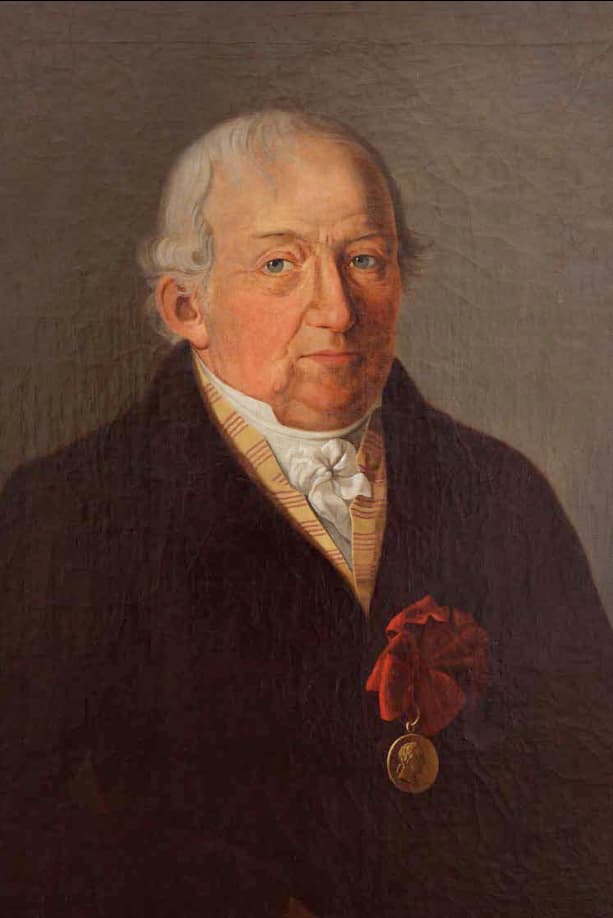
In 1808, Johan Pohl became director; he overcame a severe sales crisis and launched the production of new types of glass. The glassworks participated in the industrial exhibition in Prague in 1829, where it won a gold medal. After Pohl, Wilhelm Erben took over management together with Count František Arnošt Harrach, who established the glassworks on an international level.
The glassworks’ reputation was bolstered by visits from the Habsburgs. Archduke Joseph visited in 1804, Archduke Rainer in 1806, Crown Prince Ferdinand in 1820, and King Frederick Augustus II of Saxony in 1840.
Golden age
Starting in 1851, the glassworks’ products were regularly featured at world’s fairs, where they won top honors. At the first exhibition in London, the glassworks won a gold medal—the only one awarded to Austria-Hungary. The styles on display included Biedermeier, Second Rococo, Historicism, and Neo-Renaissance. The glassworks was rebuilt in 1854–1855, but burned down in 1861. Count Jan Nepomuk František Harrach immediately began reconstruction, and production resumed in 1863.
In the following years, the glassworks participated in world’s fairs in Paris, London, Philadelphia, Sydney, Antwerp, Barcelona, and Chicago. Its success led to the opening of representative offices and warehouses around the world, including in Prague, Karlovy Vary, Vienna, Moscow, St. Petersburg, and Leipzig. Its customers included royal courts and prominent noble families.
By the end of the 19th century, the glassworks had about 400 employees, and in 1895 a large cutting workshop with electric lighting and a water turbine was established, which is now a national technical monument.
At the turn of the 20th century, the glassworks was a pioneer of Art Nouveau. Under the leadership of Bohdan Kadlec and Jan Malina, and with artists such as Josef Petříček and Julius Jelínek, the glassworks collaborated with prominent figures, including Alfons Mucha and Jan Kotěra. Floral motifs inspired by French florists and L.C. Tiffany were developed.
Crisis - the postwar period
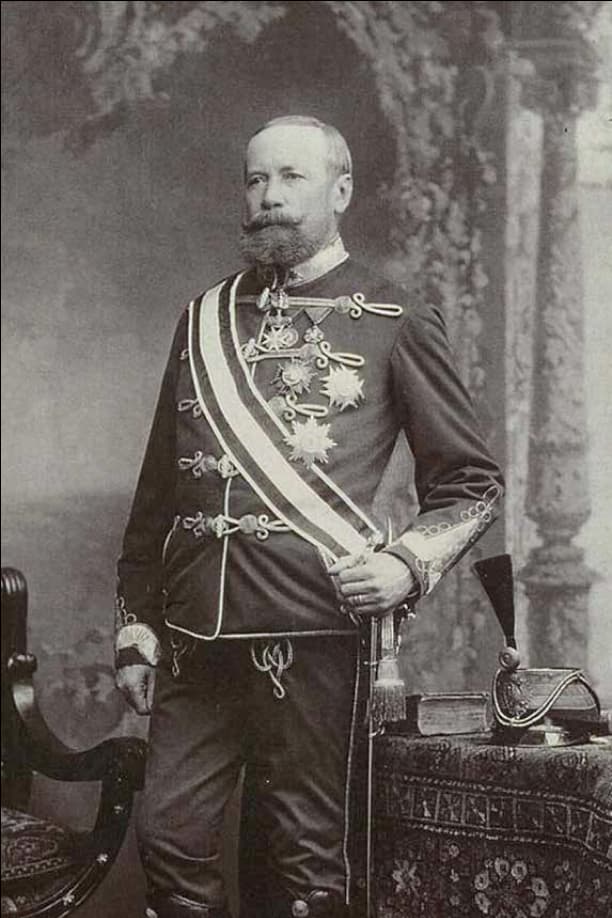
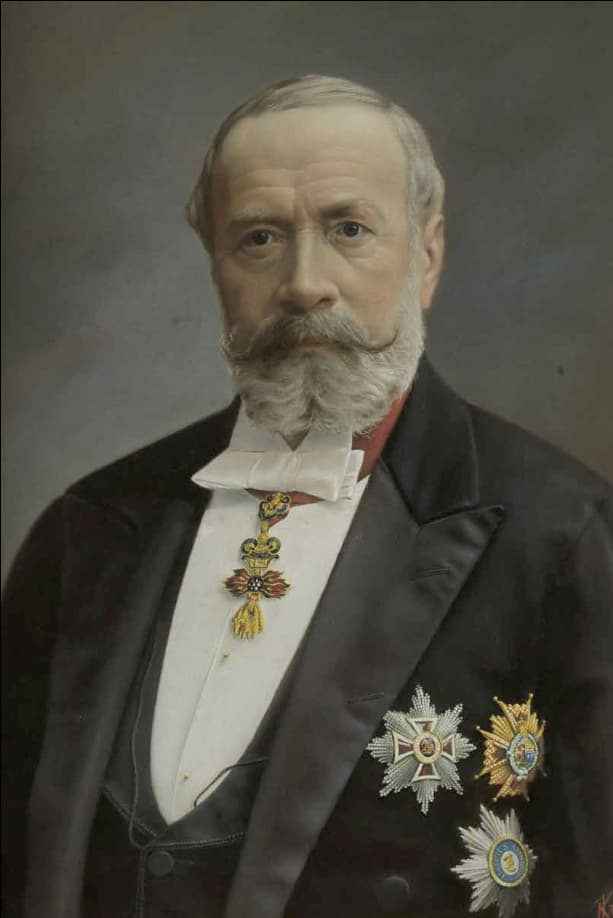
However, even extensive business contacts and worldwide fame could not avert the economic crisis linked to World War I. It was not until 1921 that trade with the United States and other countries was restored. By the late 1920s, production had stabilized thanks to director Josef Tlapa, who won the Grand Prix at the World’s Fair in Paris in 1925.
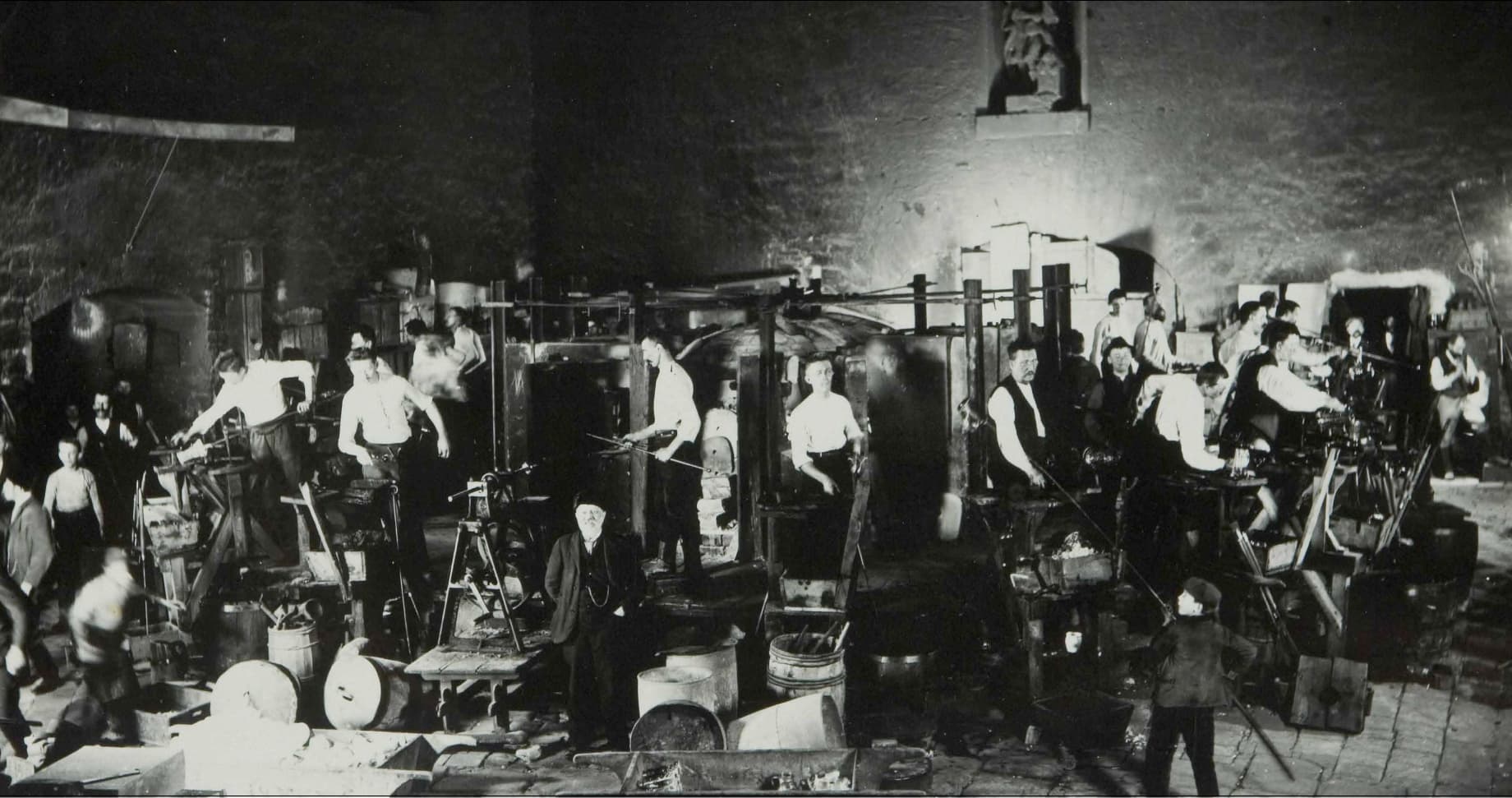
Following the signing of the Munich Agreement, the glassworks was closed for a short time but reopened in January 1939. Count Harrach’s pragmatic steps allowed the glassworks to continue operations. In December 1939, Rudolf Endler became director; he kept the plant running until the end of the war and in 1943 even forced Count Harrach to sell the glassworks at a low price. During the war, the glassworks continued to produce luxury glass.
The postwar period
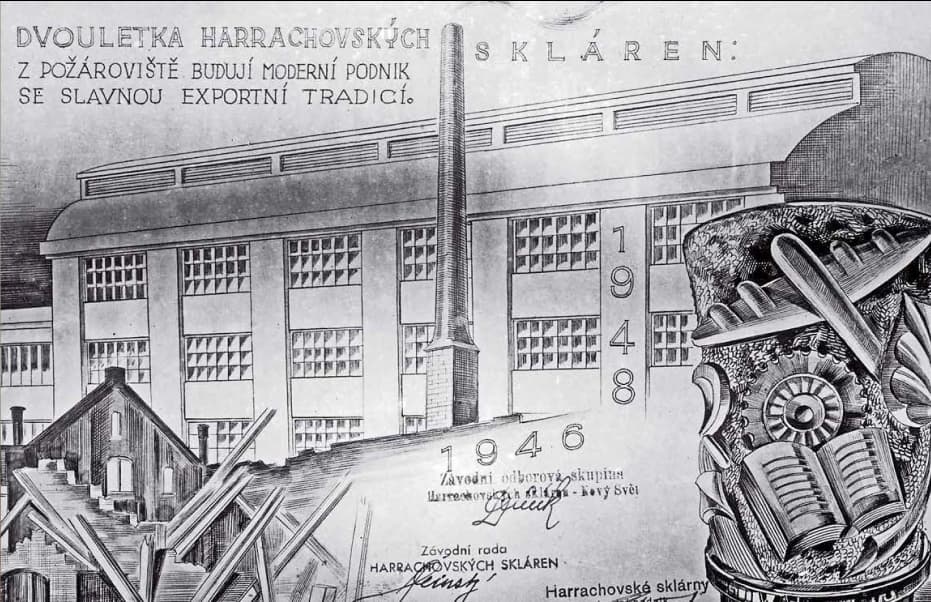
In early May 1945, Harrachov was liberated by the Soviet Army. However, on January 28, 1946, a fire destroyed the melting shop, offices, archives, and drafting room. Thanks to pressure from the employees and the intervention of K. Gottwald, reconstruction began in the summer of 1946.
After construction was completed, the glassworks came under state administration and in 1948 became part of Železnobrodské sklo. In 1958, it was taken over by Borské sklo, and in 1974 it became part of Crystalex Nový Bor. In 1952, the production of lead glass was discontinued and the production of potassium glass began, with a focus on utility glass.
From 1955 onward, production was directed by Milan Metelák, the son of the founder of the Železnobrod Glass School. In 1971, the glassworks was modernized with the switch to natural gas furnace heating. After nationalization, the glassworks lost contact with foreign customers and sold its products under the Bohemia Glass brand, which diminished its global reputation.
Curent times
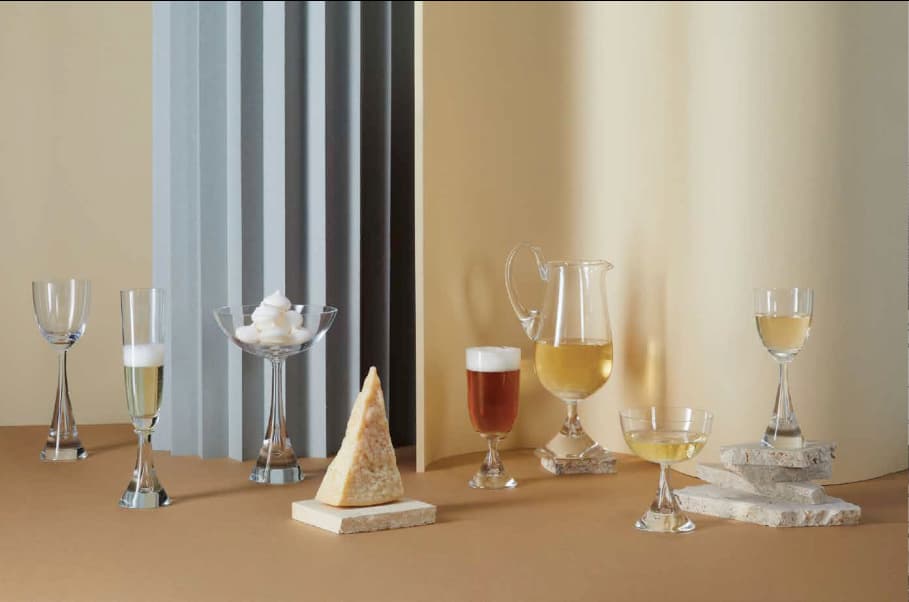
After the fall of the regime, the glassworks survived for several years under the name Crystalex Nový Bor. It was privatized in the spring of 1993, and on July 1, 1993, it was taken over by JUDr. František Novosad. After overcoming initial difficulties with loan repayments, the glassworks established business contacts in the U.S. and Canada. The crisis at the beginning of the 21st century, which was further exacerbated by the September 11 attacks and the global crisis of 2008, tested its resilience. The far-sighted owner began building a microbrewery in 2001. Revenue from the brewery, tours, the museum, and shops helped the company weather the tough times and supported glass production. The current glassworks in Harrachov has adapted to new demands, but despite advanced automation in glass production, it continues to preserve traditional handcrafted methods.