Zdá se, že používáte prohlížeč, který nepodporuje dnešní standard pro zobrazování obsahu na webu. To může způsobit, že některé části webu nemusí fungovat správně. Doporučujeme Vám prohlížeč aktualizovat nebo si stáhnout takový, který dnešní standard splňuje.

Aktualizovat

Cookie settings

"Cookies" are small browser files that allow us to temporarily store information about your device and you, the user, only while you are browsing this website. These files help us to obtain information about traffic and user behavior, which we use to continuously improve the website.

Production process

PRODUCTION PROCESS

Step 1 - Product Sketch

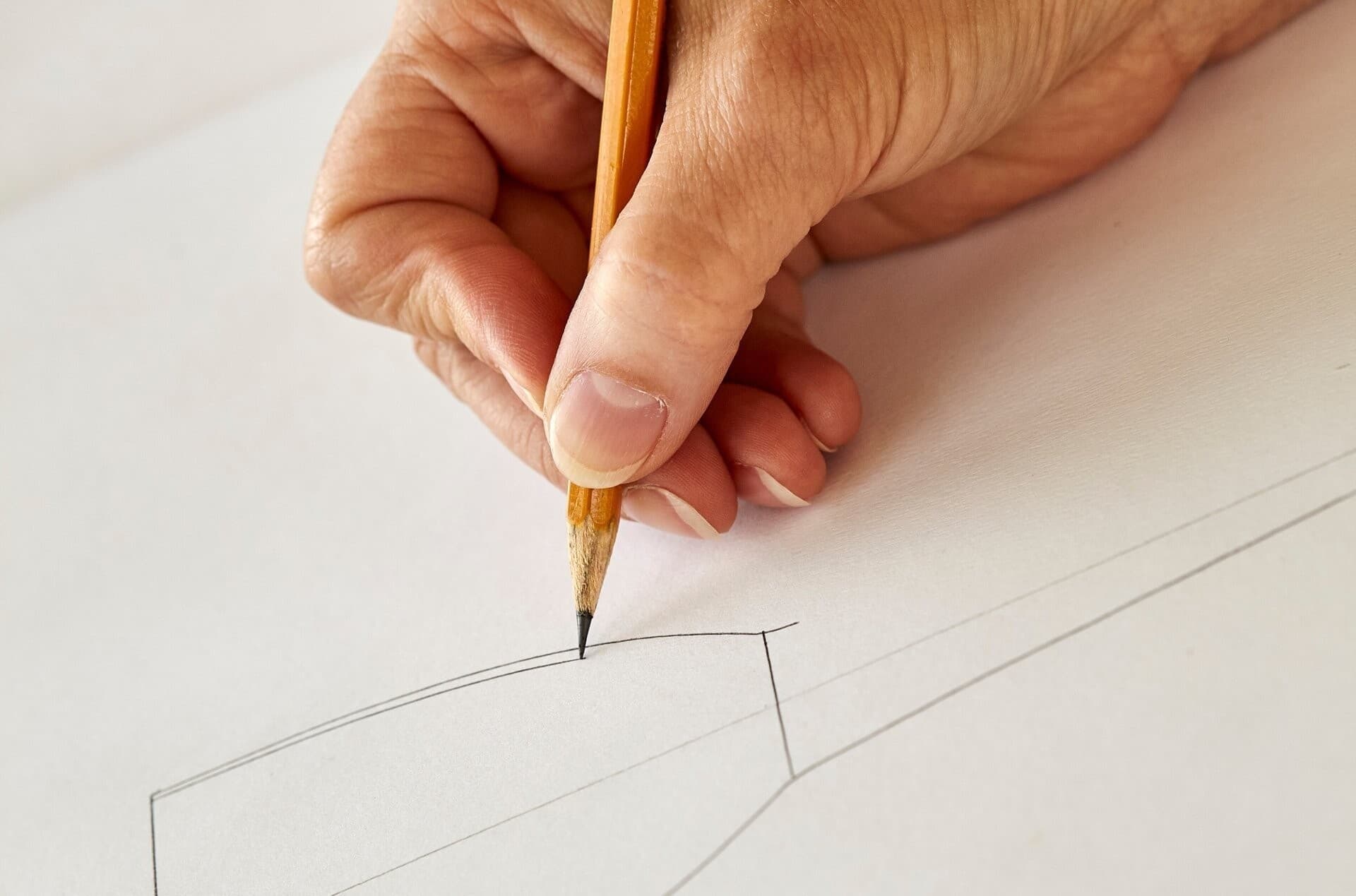
Before production begins, a technical drawing must first be created. This drawing includes information on the height, volume, diameter of the top rim, diameter of the base, overall maximum diameter, and glass thickness. Based on this drawing, a so-called “tracing” is later produced—essentially a template that the mold maker uses to create the specific mold.
Step 2 - Production of wooden molds

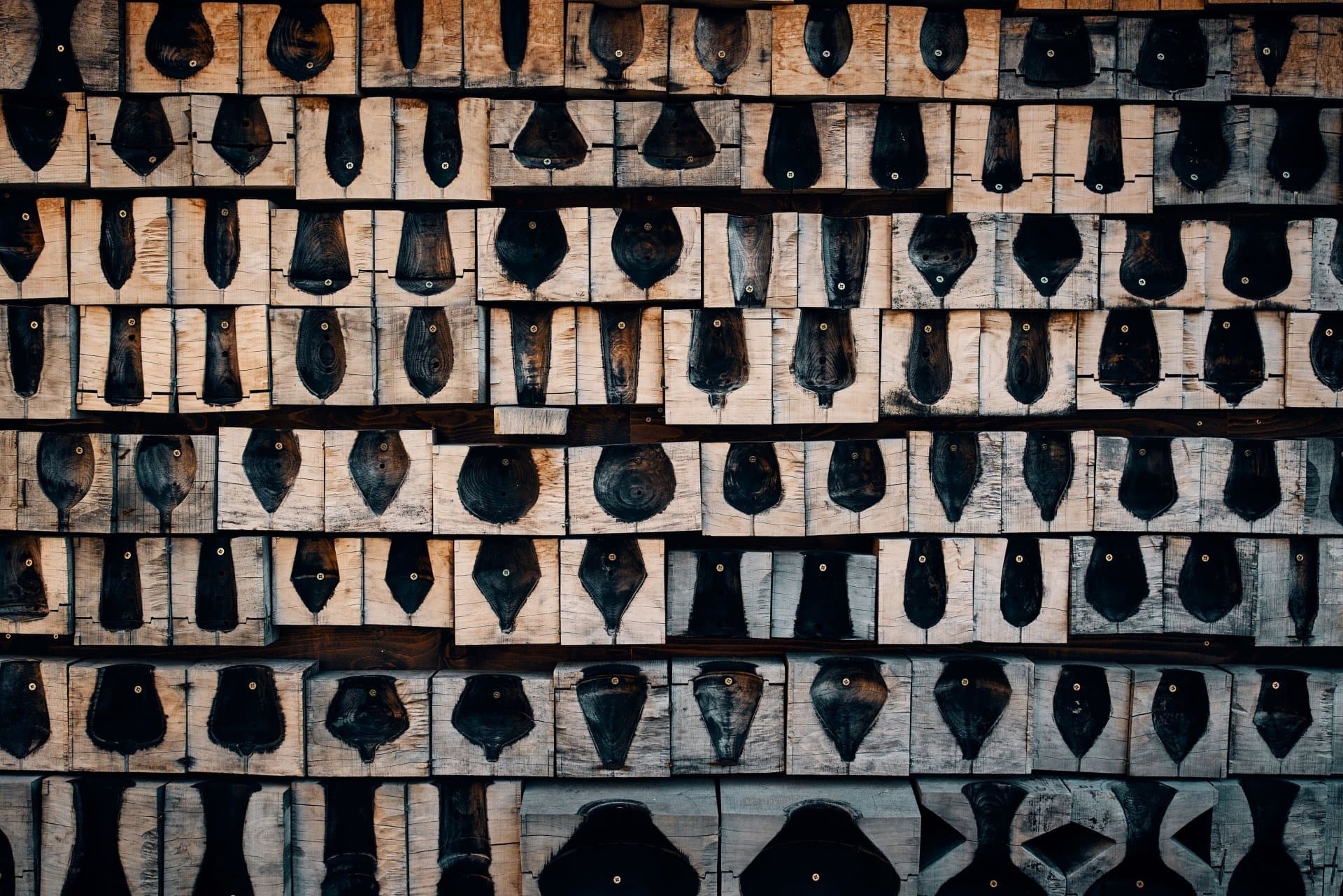
The vast majority of glass molds used at the Harrachov glassworks are made of wood, most commonly beech. For mold production, it is important that the log be sound and that the wood be sufficiently saturated with water before processing. Beech logs are therefore soaked in a pond and are not used for processing until they sink completely to the bottom. The water-soaked logs are then pulled out of the water and cut. After being shaped, the raw block of wood

is secured to a lathe, and the desired shape is carved into it using long chisels. It is worth noting that this work is not only very demanding in terms of precision but also very dangerous.


After turning, the mold is split in half, locked together, and finished with several practical details using carving chisels. After measuring and fitting the wooden handles, the mold is complete.

Step 3 - Glassblowing

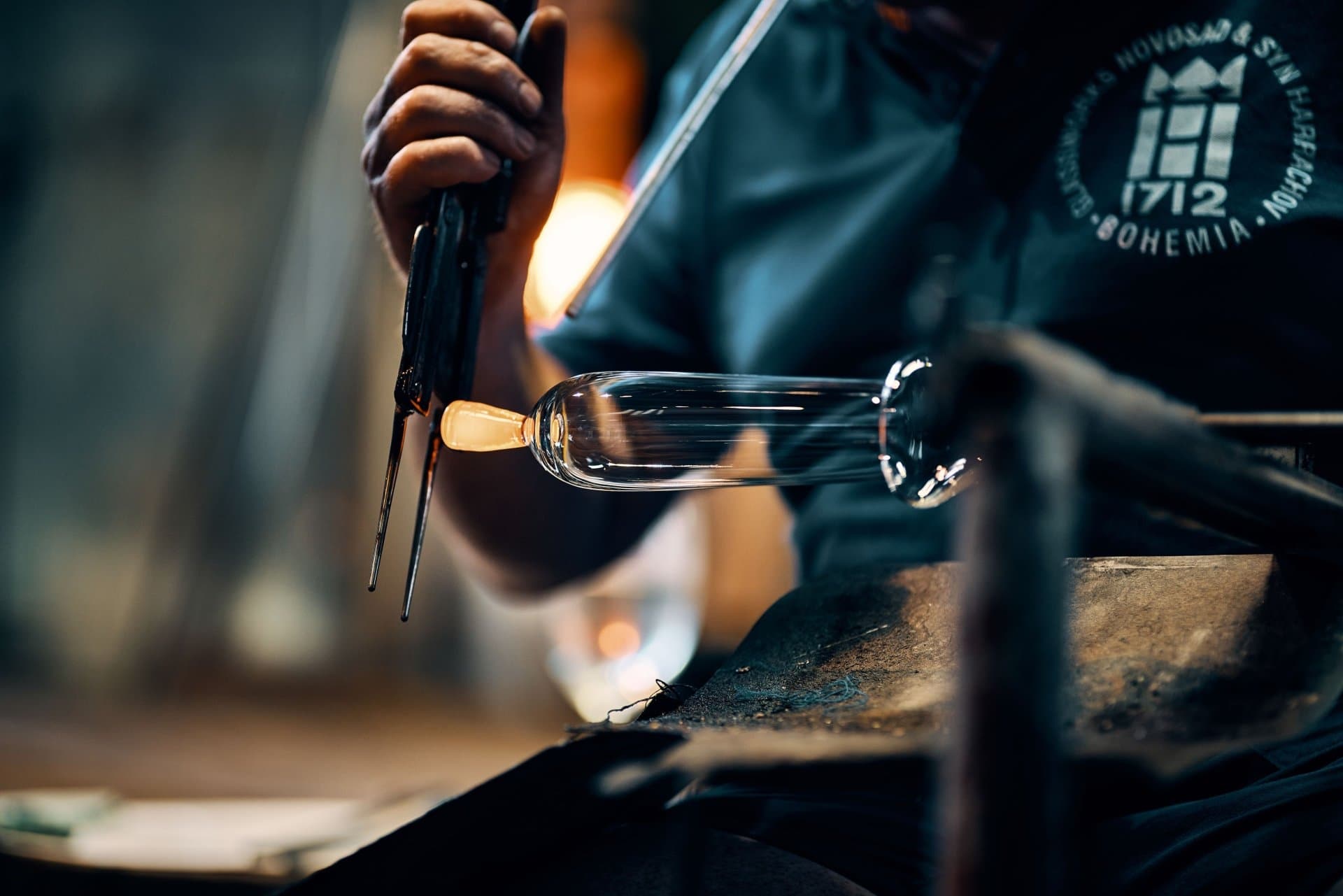
In glassmaking, molten glass is drawn from the furnace onto the glassblower’s pipe. The glassblower draws the glass and first shapes it in a wooden mold. The glassblower then moves to the tank, where the mold is submerged. After pressing the pedal, the mold rises above the surface, and the glassblower blows the shape of the goblet into it. Once the bowl is shaped, the glassblower passes the bowl and the blowpipe to a colleague at the workbench. While working at the bench, the glassblower first cuts a piece of glass and shapes it into a thin stem using a glass-shaping tool. The last glassblower in the group then finishes the base, the bottom of the entire glass. Once finished, the glass, along with the stem, is sent to the cooling furnace. Typically, five men and one assistant are involved in the production of a single glass. However, for the production of more complex glasses (such as the Masaryk collection), a group of seven or more people is required.

Step 4 - Initial processing

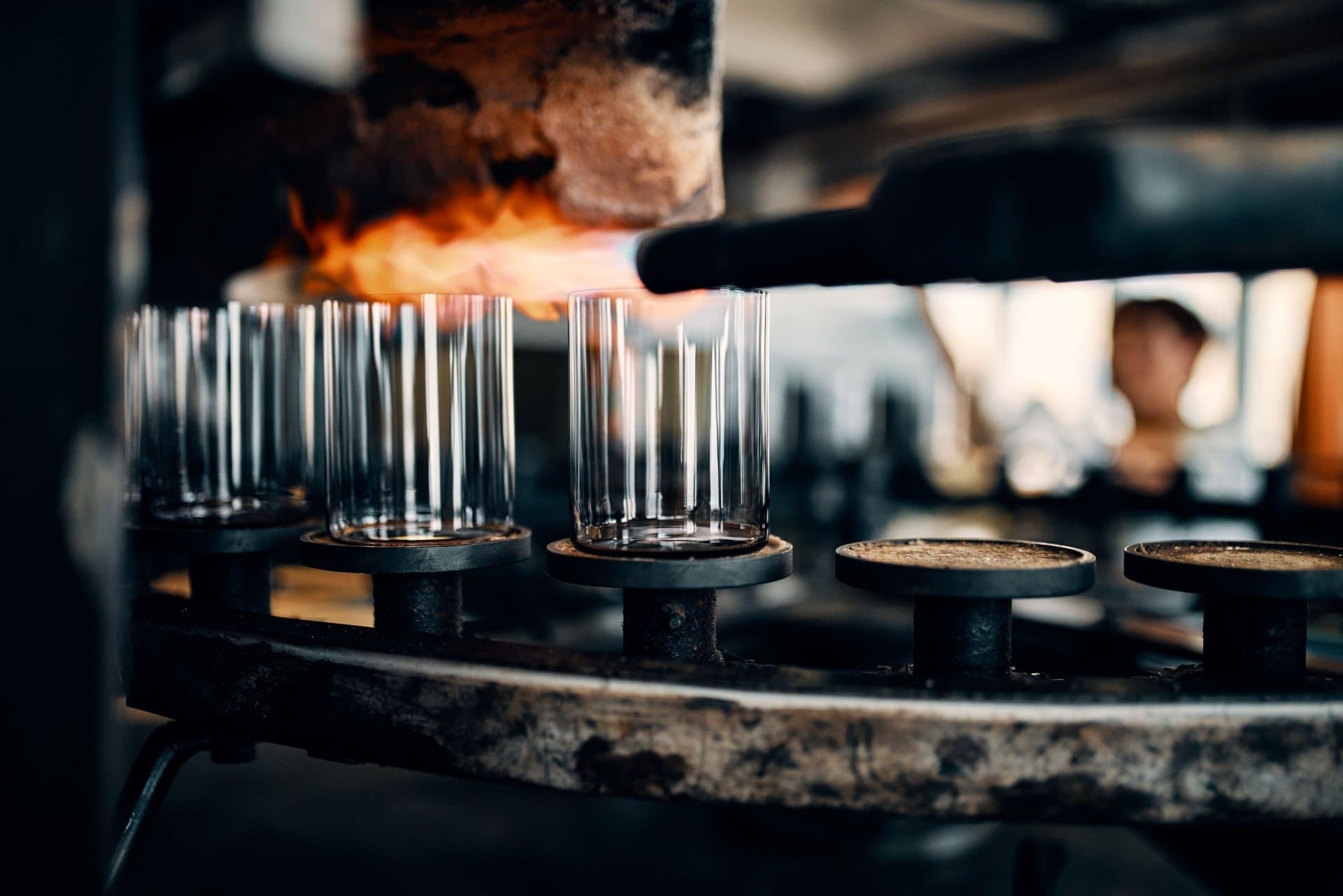
During the initial processing of the glassware, the first step is to separate the glass from the part that connects it to the glassblower’s pipe. In the first step, the glass is scored around its circumference with a vidia knife. After scoring, the glass is held over a sharp flame, which causes it to crack exactly where it was scored. However, after cracking, the glass remains sharp and must be ground down. Grinding is again done by hand on a horizontal grinding wheel. Once the glass is sufficiently ground, it is moved on a conveyor belt to the annealing machine. Here, the glass is placed on a rotating carousel, and a sharp flame melts the sharp edges of the glass until the upper rim is completely rounded. Firing the upper rim is the final stage in the production of the glass. Then all that remains is quality control, packaging, and shipment to the customer.

Would you like to see glass being made in person? Come take a tour!

During the tour, you will have the opportunity to watch glassmakers and glass cutters at work up close and see nearly the entire glass-making process using traditional glassmaking techniques.

TOUR AND PRICES